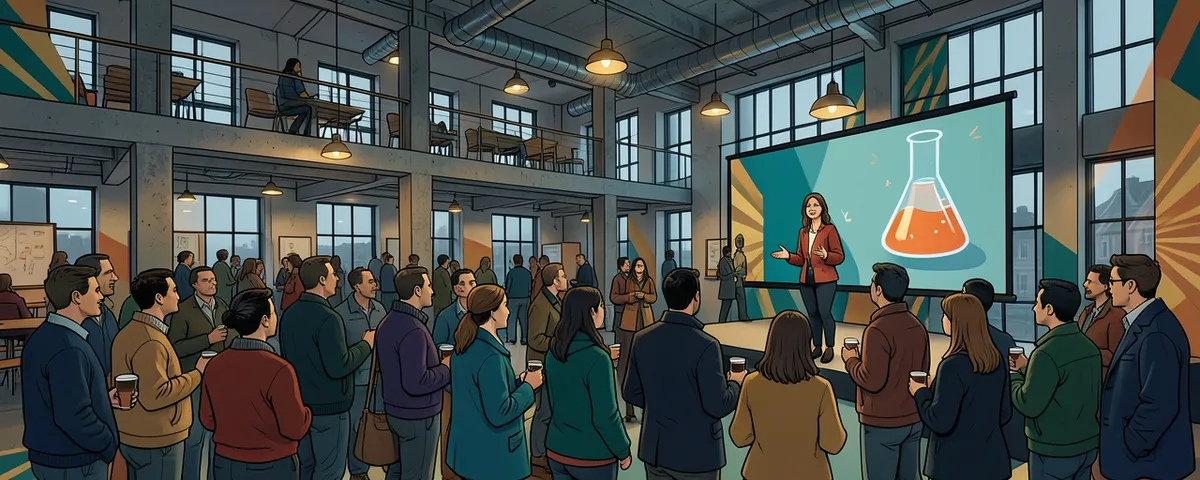
Venture Café Manchester: Ambitious Science, New Models - Focused Research Organisations & the UK Funding Landscape
Sister - Renold Building · hosted by Venture Café Manchester

What's happening: Week of 2 November 2026

Sister - Renold Building · hosted by Venture Café Manchester
Whitworth Locke · hosted by WordCamp Manchester
The weekly Venture Café Thursday Gathering, this edition on Focused Research Organisations and where they sit in the UK funding landscape - the model built for science that is too…
WordCamp Manchester returns as a barcamp rather than a conference: no fixed speaker programme, and the sessions are shaped by whoever turns up on the day. The format is built…

Other
A one-day conference on what schools actually do with assessment data, run by Equin as part of its Data In Schools Conference series and pitched at primary schools. James Pembroke, Director of Strategy at Insight, and Richard Selfridge, education data consultant at the same firm, lead the keynote sessions. Joshua Perry of Smartgrade and Carousel runs a step-by-step session on stripping work out of school data processes, and a Making Data Meaningful panel brings in Hilary Fine, Assessment Lead at Smartgrade, and Vicky Merrick, CEO and founder of Merrick-Ed, with further panellists still to be announced. There are slots for delegates to put their own experience in the room. 08:30 to 15:00 at The Studio on Lever Street. GBP 75 including lunch and refreshments, refundable up to seven days before.
Thu 5 Nov · 8:30am · The Studio
A one-day conference on what schools actually do with assessment data, run by Equin as part of its Data In Schools Conference series and pitched at primary schools. James Pembroke, Director of Strategy at Insight, and Richard Selfridge, education data consultant at the same firm, lead the keynote sessions. Joshua Perry of Smartgrade and Carousel runs a step-by-step session on stripping work out of school data processes, and a Making Data Meaningful panel brings in Hilary Fine, Assessment Lead at Smartgrade, and Vicky Merrick, CEO and founder of Merrick-Ed, with further panellists still to be announced. There are slots for delegates to put their own experience in the room. 08:30 to 15:00 at The Studio on Lever Street. GBP 75 including lunch and refreshments, refundable up to seven days before. Why go: the people building the tools and the people using them in the same room, arguing about workload rather than dashboards. Best for school data leads, and for edtech builders selling into primary education.

Founders · Other
A small-group coaching session on moving an innovative idea towards an actual outcome: a new partnership, a commercial route, or a bigger funding bid. Drew (Rusty) Carroll, an external innovation coach Manchester Digital met at its Digital Environment conference, facilitates. The format is deliberately open. Attendees can listen, or put their own problem in the room and draw on the group's experience. It is the first of a planned monthly series, so expect a small, repeat-heavy room rather than a one-off audience. Two hours, free, in Room 4.204 at University Place, with capacity capped at 30. Manchester Digital asks anyone who books and then cannot attend to release their place in advance.
Thu 5 Nov · 10:00am · The University of Manchester
with Drew (Rusty) Carroll (Innovation coach, Independent)
A small-group coaching session on moving an innovative idea towards an actual outcome: a new partnership, a commercial route, or a bigger funding bid. Drew (Rusty) Carroll, an external innovation coach Manchester Digital met at its Digital Environment conference, facilitates. The format is deliberately open. Attendees can listen, or put their own problem in the room and draw on the group's experience. It is the first of a planned monthly series, so expect a small, repeat-heavy room rather than a one-off audience. Two hours, free, in Room 4.204 at University Place, with capacity capped at 30. Manchester Digital asks anyone who books and then cannot attend to release their place in advance. Why go: coaching rather than content, with a cap low enough that you will actually get airtime on your own idea. Best for researchers and founders stuck between a promising idea and a route to market.
One email. The week's best events, picked by a person, not an algorithm.
SPOTLIGHTFounders · Deep Tech
The weekly Venture Café Thursday Gathering, this edition on Focused Research Organisations and where they sit in the UK funding landscape - the model built for science that is too large for a single lab and too early for a company, and the question of what funds that work here. Venture Café evenings run as a set of sessions plus open networking across three hours rather than one talk, at SISTER on the Renold Building site. Free, with registration through the Venture Café community platform. The full session list is published closer to the date.
Thu 5 Nov · 5:00pm · Sister - Renold Building
The weekly Venture Café Thursday Gathering, this edition on Focused Research Organisations and where they sit in the UK funding landscape - the model built for science that is too large for a single lab and too early for a company, and the question of what funds that work here. Venture Café evenings run as a set of sessions plus open networking across three hours rather than one talk, at SISTER on the Renold Building site. Free, with registration through the Venture Café community platform. The full session list is published closer to the date. Why go: focused research organisations and the money around them get discussed far more in London than in Manchester, and this is the city's standing room for research-heavy founders. Best for deep tech founders, university spinouts, and anyone raising against a science roadmap rather than a revenue one.
SPOTLIGHTSaaS · Design
WordCamp Manchester returns as a barcamp rather than a conference: no fixed speaker programme, and the sessions are shaped by whoever turns up on the day. The format is built around structured conversations between the people who build, design and run WordPress sites, rather than talks delivered at them. It takes place in the Storehouse at Whitworth Locke on Princess Street, signposted from reception and fully accessible, with discounted overnight rooms for attendees. The Manchester WordPress User Group is the local community behind it. Timings beyond the morning start, and the ticket price, are not yet published, and the schedule page is still thin. Check both before booking.
Fri 6 Nov · 9:00am · Whitworth Locke
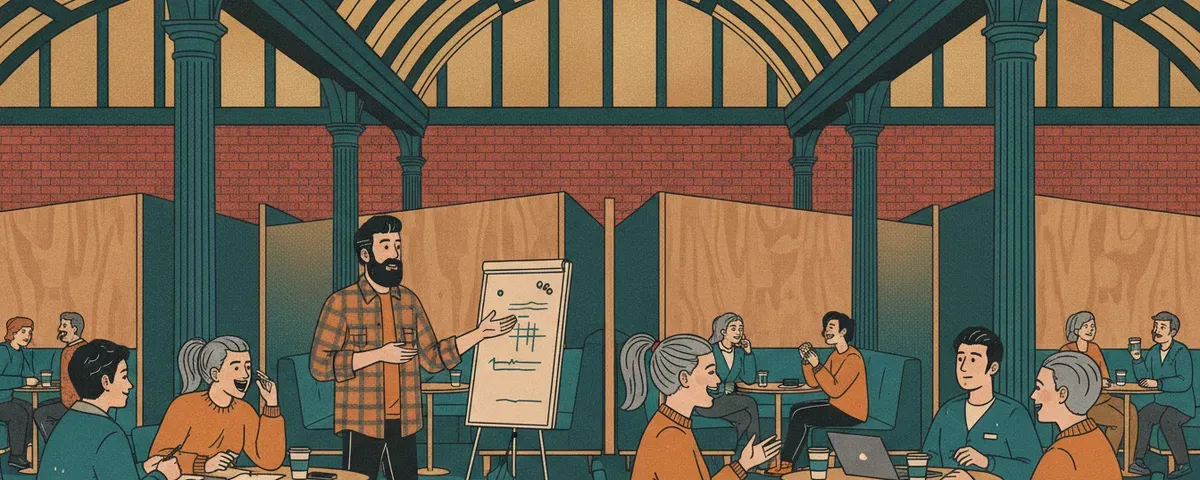
WordCamp Manchester returns as a barcamp rather than a conference: no fixed speaker programme, and the sessions are shaped by whoever turns up on the day. The format is built around structured conversations between the people who build, design and run WordPress sites, rather than talks delivered at them. It takes place in the Storehouse at Whitworth Locke on Princess Street, signposted from reception and fully accessible, with discounted overnight rooms for attendees. The Manchester WordPress User Group is the local community behind it. Timings beyond the morning start, and the ticket price, are not yet published, and the schedule page is still thin. Check both before booking. Why go: WordPress still runs a large share of Manchester's agency and client work, and a barcamp is where the unglamorous problems get discussed honestly. Best for agency developers and freelancers who want peers rather than a keynote.

Marketing · SaaS
A morning session for B2B SaaS marketers running account-based programmes, and for anyone trying to get their marketing data into a state an AI tool can do something useful with. Jonathan Catton, Head of Data & Insights at the agency Hallam, walks through how his team pulled scattered marketing data into one place and what changed once they had. Attendees then take their own questions to small tables with hosts, and the morning closes with open networking run by Silicon Mingle. Organised by Overfunded, with Paradev (formerly Superset) as headline sponsor; the organisers say everyone who turns up gets six months of free access, explained on the day. Free, in person at Department Campfield, and no technical background is assumed.
Fri 6 Nov · 10:00am · Department Campfield
with Jonathan Catton (Head of Data & Insights, Hallam)
A morning session for B2B SaaS marketers running account-based programmes, and for anyone trying to get their marketing data into a state an AI tool can do something useful with. Jonathan Catton, Head of Data & Insights at the agency Hallam, walks through how his team pulled scattered marketing data into one place and what changed once they had. Attendees then take their own questions to small tables with hosts, and the morning closes with open networking run by Silicon Mingle. Organised by Overfunded, with Paradev (formerly Superset) as headline sponsor; the organisers say everyone who turns up gets six months of free access, explained on the day. Free, in person at Department Campfield, and no technical background is assumed. Why go: most ABM sessions stay at strategy level and skip the data plumbing that decides whether any of it works. Best for B2B marketers and growth leads at SaaS companies who own the numbers themselves.
Paste the link and we'll fill in the rest. It's free, and a person reads every one.
add your event
AI & ML · Founders · DeepTech
UniCS, the University of Manchester's computer science society, runs the city's flagship student hackathon: a single-day build at the Nancy Rothwell Building, free to enter and open to undergraduates and postgraduates from any university. Check-in opens at 09:00, hacking runs 12:00 to 18:00, and judging and the closing ceremony finish around 21:30. Sponsor workshops run through the afternoon from NatWest, Reply, Tether and Neptune North. Food is provided. Over £70,000 in prizes is advertised, £3,500 of it cash across the top three. Everyone applies individually and teams form on the Discord or on the day. Hacker applications closed on 17 October.
Sat 7 Nov · 9:00am · Nancy Rothwell Building
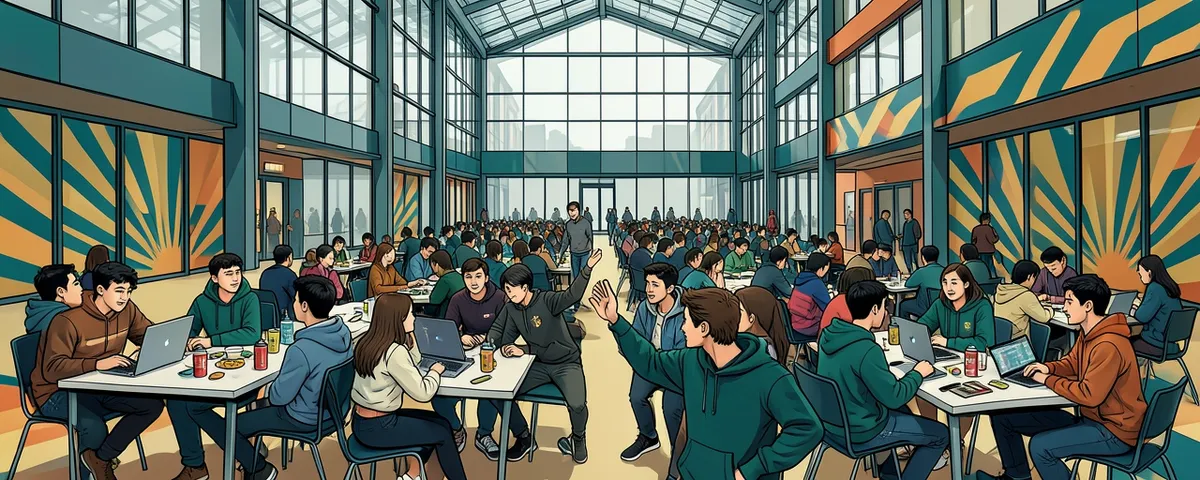
UniCS, the University of Manchester's computer science society, runs the city's flagship student hackathon: a single-day build at the Nancy Rothwell Building, free to enter and open to undergraduates and postgraduates from any university. Check-in opens at 09:00, hacking runs 12:00 to 18:00, and judging and the closing ceremony finish around 21:30. Sponsor workshops run through the afternoon from NatWest, Reply, Tether and Neptune North. Food is provided. Over £70,000 in prizes is advertised, £3,500 of it cash across the top three. Everyone applies individually and teams form on the Discord or on the day. Hacker applications closed on 17 October. Why go: a complete idea-to-demo cycle in one day, judged, with engineers from NatWest, Arm, Codethink and Google in the building. Best for students who want something finished to show at interview rather than another coursework repo.
A one-hour fireside chat and book launch at the Portico Library asking a blunt question about AI: whose problems is it actually being built to solve. Jenny Garrett OBE and…
The November edition of Datacove's Manchester data community night, with two talks and a long networking tail. Fiona Pye, Senior Data Analyst at AutoTrader UK, talks about two years embedded…
MISRA's public conference on where its coding guidelines go next, and what AI-assisted development means for code that has to be demonstrably safe. MISRA guidelines govern C and C++ in…
MISRA's public conference on where its coding guidelines go next, and what AI-assisted development means for code that has to be demonstrably safe. MISRA guidelines govern C and C++ in safety- and security-critical software: automotive, aerospace, medical devices, industrial control. The day covers the latest developments in the guidelines and gives users room to share how they are applying them in practice. The audience MISRA names is specific — developers writing to the guidelines, the internal reviewers and auditors who check that work, and managers accountable for safety-relevant projects. 08:30 to 16:15 at Delta Hotels Manchester Airport in Hale Barns. GBP 50 general admission. The agenda and speaker list are not published on the ticket page. Why go: the standards body itself in the room, which rarely happens outside the automotive supply chain. Best for embedded and safety-critical engineers, and the compliance people who sign their work off.
A one-hour fireside chat and book launch at the Portico Library asking a blunt question about AI: whose problems is it actually being built to solve. Jenny Garrett OBE and her daughter Leah-Sunshine Garrett are in conversation as part of the library's Portico Ubuntu: Queens in Print series. The pairing is the point — two generations on who gets designed for and who gets designed around as AI systems are built out. Doors 18:00, talk 18:30 to 19:30, at 57 Mosley Street. GBP 10, and suitable for ages 14 and over. Why go: a short, cheap counterweight to the build-first AI events filling the rest of the Manchester calendar, in one of the city's better rooms. Best for people shipping AI products who want the equity question put to them by someone outside tech.
A demo day run inside NatWest's Manchester Accelerator hub, where a hand-picked group of entrepreneurs pitch to a panel drawn from the Manchester ecosystem, NatWest's own team and founders who have raised before. The panel gives live feedback on each pitch: structure, delivery, the questions that get asked and the ones that trip people up. The afternoon runs 14:00 to 17:30 at the hub on Spinningfields Square, with networking during and after. Free, and open beyond the pitching cohort, so you can come to watch. Why go: watching four or five founders get picked apart kindly, in order, teaches you more about your own deck than a week of reading will. Best for pre-seed and seed founders in Greater Manchester about to start raising, and anyone who wants to see what investors in this city actually ask.
with Gareth Ford Williams (Director of Accessibility, Double FW Ltd and CAN) · Llara Geddes (Solutions Director, AND Digital) · Emily Webber (Consultant, Tacit) + 1 more
Natter Community's one-day conference on design, product and AI, at Autotrader, 3 Hawkshaw Street, on Thursday 12 November, 8:30 to 18:30. Breakfast and lunch are included. The theme is transparency in digital products. Speakers so far: Gareth Ford Williams (Double FW and CAN) on accessibility, Llara Geddes (AND Digital), Emily Webber (Tacit), Rachel Morgan-Trimmer (Firebird), design writer Rob Alderson and Carrie Tudsbury, service design lead at Autotrader. Registration is 8:30, talks start at 9:30, and the full agenda is still being filled in. General admission is 50 pounds. Why go: a full day with people who ship digital products, and a lot of it is about how AI is changing design work. Best for designers, researchers and product people; engineers and founders will get less out of it.
The November edition of Datacove's Manchester data community night, with two talks and a long networking tail. Fiona Pye, Senior Data Analyst at AutoTrader UK, talks about two years embedded in a backend development team: what moving between analytics and engineering changed about how she works, and what the developers got back in understanding of the data they produce. Jonas Almesri, co-founder of GenSight.AI, follows on AI visibility — how large language models decide which brands they see, believe, cite and recommend, and the measurement problems his team is working on as agents move from recommending to buying. Drinks and nibbles from 18:00, talks around 18:30, close at 20:00, then a nearby pub. Free, at DiSH in Heron House. Datacove runs four of these a year in Manchester. Why go: two speakers who actually do the work, on the two questions data teams are being asked right now. Best for analysts, data engineers and anyone responsible for being found by AI.
with Jitesh Gosai (Principal Tester, Mobile Group, BBC) · Ben Flannery (Principal Consultant, Transform)
Deliver Sessions is a meetup for people interested in how software teams work well together. This edition, Into the Unknown, is hosted by consultancy Transform in the Express Building on Great Ancoats Street, with refreshments provided. Two talks. Jitesh Gosai, Principal Tester in the BBC's Mobile Group, covers navigating uncertainty in complex software systems. Ben Flannery, Principal Consultant at Transform, looks at moving beyond "in or out" in team conversations about AI, using a retrospective-style approach. It runs 6 to 8:30pm and has a code of conduct. Price isn't stated on the page. Why go: delivery, testing and team practice from a named BBC practitioner, which is rarer than another AI demo night. Best for delivery managers, testers and engineering leads.
One-day event at the Lowry Hotel for ecommerce founders and brand owners on applying AI in a real online shop. Ten talks from founders running brands at £1M to £10M revenue, plus six or seven small-group roundtables. One talk is named so far: Andrew Afonin on wiring AI into Magento, HubSpot and Klaviyo rather than bolting on a chatbot (10:00). Runs 9:00 to 17:00, registration and coffee from 9:00. EcommerceCamp says there are no agency pitches on stage. The ticket price isn't published on the page; refunds are available up to 7 days before. Why go: operators talking to operators, with revenue numbers attached, is rare in ecommerce AI. Best for founders and heads of ecommerce at small and mid-size brands. Only one speaker is named, so judge it on the roundtables as much as the talks.
Manchester Data Hive is a free, volunteer-led day for data and AI people working in the Microsoft stack: Fabric, Azure SQL, Power BI and Copilot. Two rooms of 50 run parallel tracks at the Copthorne Hotel in Salford Quays, with talks from data engineers, analysts, scientists and AI practitioners. Sponsors cover the cost. Listings give 9:00 to 17:00. No agenda or speaker names are published yet, and the site's ticket link looks like a placeholder, so check it before you travel. Why go: free, small and technical, and first-timers are welcome. Best for BI analysts and data engineers who want a day of Fabric and Power BI practice without conference prices. With no agenda yet, it's a bet on the community.
Luke Grayland (Conferma) · Alastair Jepps (Bally's Interactive)
Two engineering talks on AI that has left the prototype stage, hosted by Bally's Interactive in Spring Gardens. Luke Grayland, Senior Software Developer at virtual card platform Conferma, covers agentic…
Simon Ellis, Head of AI Transformation and Enterprise Architecture at Pets at Home, on what happens to retail when an AI agent rather than a person does the browsing and…
Prolific North's annual full-day conference on where marketing and consumer behaviour are heading into 2027, held at Sister in the Renold Building. The pitch is cutting through noise: the organisers'…
IGPP's one-day government technology show at CorpAcq Stadium in Eccles, aimed at senior leaders from central government, local authorities, the NHS and the wider public sector, plus the suppliers working with them. The programme covers how national digital strategy turns into local delivery: AI and data-driven government, cyber resilience, and local government reorganisation, with legacy IT, tight council budgets, digital exclusion and public trust in data as the hard problems. Runs 9:00 to 17:00, free to attend with free parking. The organisers say no sales or business-development attendees. No speakers are named on the booking page. Why go: a useful day for govtech founders who want to hear what public-sector buyers say they need, as long as you go to listen and not to pitch.
with Mark Lyons (Investor, Puma Growth Partners) · Laura Wiggins (Investor, YFM Equity Partners) · Tom Watts (Partner, Cooper Parry)
An evening on the operational side of getting from seed to Series A: building a repeatable growth engine, picking a go-to-market motion, and the hiring calls that either compound or cost you a year. Cooper Parry works with more than 500 scaling businesses and hosts this with Exchange Accelerator. Speakers are Mark Lyons of Puma Growth Partners, Laura Wiggins of YFM Equity Partners and Tom Watts of Cooper Parry, with a founder speaker still to be confirmed. The organisers moved the start on 27 October: it now runs 17:00 to 20:30 at Campfield Studios on Liverpool Road, finishing with drinks and networking. Registration is free but approval-gated on Luma. Why go: two active Northern growth-stage investors in the room explaining what they fund, alongside advisers who see the same mistakes repeatedly. Best for founders who have raised a seed round and are eighteen months from the next one.
Simon Ellis, Head of AI Transformation and Enterprise Architecture at Pets at Home, on what happens to retail when an AI agent rather than a person does the browsing and the buying. The talk works through the shopping journey disappearing: agents that understand intent, research products, compare alternatives, negotiate trade-offs and complete transactions. Ellis covers what OpenAI, Google, Microsoft, Amazon and Shopify are building, and what it does to the things retailers currently compete on — site design, search rankings, advertising, merchandising, brand loyalty. The uncomfortable questions get asked directly: who owns the customer relationship when an agent decides, and are retailers selling to people or to other agents. Manchester Statistical Society hosts at Cross Street Chapel, 18:00 to 20:00, free, with coffee from 17:30. Entrance on Cross Street at Chapel Walks, opposite Pret; use the intercom. Why go: a retail AI lead being specific about his own industry's exposure rather than discussing agents in the abstract. Best for retail, ecommerce and marketing people, and anyone building agents that transact.
with Dieter Gobeyn (Speaker, ) · Jaseetha Satkurunathan (Speaker, )
Two talks on what cloud and AI work costs once it is actually running. Dieter Gobeyn asks what an agent actually costs: token economics in Microsoft Foundry, designing for cost control before you ship, and when not to build an agent at all. Jaseetha Satkurunathan covers multi-tenant Kubernetes - keeping customers isolated on a shared cluster instead of standing up one cluster per customer. Hosted by the Northern Azure User Group at Morson Edge in the Bonded Warehouse. The published agenda lists different talk titles from the speaker billing, so check the page nearer the date. Why go: both talks are about the bill and the blast radius rather than the demo, which is the part most Azure content skips. Best for platform engineers, architects and anyone who owns a cloud budget.
Dot Net North's November talk is a deep dive into acceptance testing: moving beyond step definitions to a domain specific language for test data, using the Page Object Model together with a logical functional model. The speaker also covers security and accessibility testing inside BDD suites. It's a talk, not a workshop, so no laptop needed. Free entry and refreshments at BrightHR in the Peninsula Building, close to Victoria station. RSVPs often hit a waitlist that usually clears before the night. Why go: Dot Net North is one of Manchester's longest-running developer groups, and this is a practical session for .NET and QA engineers who maintain big test suites. Skip it if you want AI or startup content.
Prolific North's annual full-day conference on where marketing and consumer behaviour are heading into 2027, held at Sister in the Renold Building. The pitch is cutting through noise: the organisers' framing is that the sector is sold a new big idea or martech solution every week and the hard part is working out which of them move brand share. Expect a day of sessions on consumer trends, technology in marketing and brand growth, drawn from the northern agency, brand and media community that Prolific North covers year-round. Nine until half four, so a full working day out. Why go: it is the one day a year the North West's agency and in-house marketing world is in one building, which makes the corridors as useful as the stage. Best for agency leaders, brand marketers and anyone selling into them.
GM Business Growth Hub and Innovaud, the innovation agency for the Canton of Vaud, bring Swiss market-entry routes to DiSH Manchester for a morning on the Greater Manchester to Lausanne corridor. The focus is practical: soft-landing and market-entry programmes, university and research collaborations with institutions including EPFL, investor and scale-up networks, and trade and export support. Partner organisations from both sides are in the room, and attendees can request 1-1 meetings with selected partners afterwards through the registration form, with introductions following by email. It runs 09:00 to 12:30 and is free. Eligible businesses need a registered trading address in Greater Manchester; investors and business support organisations are also welcome. No individual speakers are named. Why go: a short, concrete route into the Swiss deep tech, life sciences, cyber and AI ecosystem without the cost of a trade mission. Best for Manchester scale-ups already weighing European expansion, and the people who advise them.
CTO Craft's Manchester mixer: a relaxed evening for CTOs and technology leaders to swap stories and experiences over drinks. Hosted by CTO Craft with Dave McKerral and Rob Bowley at The Old Monkey, 90 Portland Street. There are no speakers or set talks, so it's conversation-led. Free, registration through CTO Craft's Luma page. The organiser's page runs it 17:30 to 20:30. Why go: a small room of engineering leaders in a city with few CTO-only gatherings. Best for CTOs, heads of engineering and tech leads who want peer conversation rather than a pitch.
Sixth and last workshop in the NatWest Accelerator's 12-week Sales Accelerator, at the Manchester hub at 1 Spinningfields Square, 09:45 to 12:00. Founders pull the earlier sessions together into one sales playbook using the programme's DEAL framework: customer insight, funnel, metrics and pitch in a single structure. The session also has real founder stories and a Growth Lab on sales resilience. Individual workshops are open to people who haven't done the full programme. Why go: it's the session that turns the series into a working document. Best for early-stage founders who have customers but no repeatable sales process.
Two hours of founder-to-founder conversation at the DoubleTree by Hilton Piccadilly, run by Techcelerate, the community of first-time and exited tech founders that has been going since 2006. The format is peer discussion with no panels and no pitches. Topics on the table: validating ideas in an AI-saturated market, building products people pay for, acquiring and retaining users, and scaling without burning time or capital. It's pitched at early-stage to scaling tech founders, angels and senior operators. Host is Manoj Ranaweera. Free, with about 20 places left at the time of writing. Why go: a small, unscripted room for founders who want blunt peer advice on traction and growth rather than a talk. Best for early-stage tech founders and angels looking for real deal conversations.
with Torsten Strauß (CEO, inside-sqlserver / Principal SQL Consultant, Sarpedon Quality Lab) · Mark Pryce-Maher (Senior Program Manager, Microsoft Fabric, Microsoft)
Two full-length SQL and Fabric sessions from the Manchester Data Platform User Group, in person only and not recorded. Torsten Strauß, a Microsoft MVP, CEO of inside-sqlserver and principal SQL consultant at Sarpedon Quality Lab, opens at 18:00 on practical performance tuning for Azure SQL and SQL Server: dissecting slow queries, finding the real bottlenecks, and where Intelligent Query Processing helps and where it hurts in production. After pizza, Mark Pryce-Maher, Senior Program Manager on Microsoft Fabric, compares Fabric Warehouse and Lakehouse and gives a decision framework rather than a feature list. Doors and intros from 17:45 at XYZ Works on Hardman Street. Free, but register early because names go to building security. Why go: two speakers who build and consult on these products, giving ninety minutes of depth rather than a vendor overview. Best for SQL developers, data engineers and architects making Fabric platform decisions.
with Luke Grayland (Senior Software Developer, Conferma) · Alastair Jepps (VP Technology, Bally's Interactive)
Two engineering talks on AI that has left the prototype stage, hosted by Bally's Interactive in Spring Gardens. Luke Grayland, Senior Software Developer at virtual card platform Conferma, covers agentic payments: what changes about authorisation, identity, consent and trust once agents spend money, the layers of the agentic payments stack, the emerging protocols from Google, Mastercard and Visa, and the unsolved parts around disputes, liability and merchant verification. Alastair Jepps, VP Technology at Bally's Interactive, follows with behaviour-driven personalisation across 700,000 players and five casino brands: cost control, mixing classical machine learning with semantic matching, and using evaluations, error analysis, A/B tests and contextual bandits to keep improving. Doors 18:00, talks from 18:35, close at 20:00. Free, with pizza and drinks, and a short AI Spotlight segment to open. Why go: specific, numbers-attached engineering from people running AI in production, and the organisers enforce a no-sales-pitch rule. Best for engineers and tech leads shipping AI features.
with Arik Fletcher (Speaker — Data Residency Is Not Data Sovereignty: What UK Boards Get Wrong, ) · Anas Khan (Speaker — Designed to Recover. But Can It Actually Recover?, )
Cloud Native + Kubernetes Manchester's November meetup at the Bonded Warehouse, 18 Lower Byrom Street, from 18:00. Two talks go at concrete problems: data sovereignty, and whether disaster recovery plans actually recover when you test them. Lightning talks from the floor follow, with time to meet other platform and infrastructure engineers in the city. Free. Why go: a regular room for people running clusters and cloud platforms, with a programme built around two problems ops teams meet in practice. Best for platform, SRE and cloud engineers.
Mindstone's Manchester AI meetup, run with UKAI and Barclays at Heron House, DiSH, 47 Lloyd Street. The evening is two live demos of AI tools, no slides, plus three talks: What I Learned Building With LLMs, How To Be More Productive Using AI, and What Does The Future Look Like With AI. Pizza and drinks to finish. Free, capped at 200 places. Why go: it's demo-led and pitched at mixed levels, so founders, engineers and managers all get something. Best for people deciding how to apply AI at work who want to see tools running live.
The Chartered Institute of Information Security brings its annual conference to Manchester for the first time, at Emirates Old Trafford. The main day is Tuesday 24 November, with the programme…
The Chartered Institute of Information Security brings its annual conference to Manchester for the first time, at Emirates Old Trafford. The main day is Tuesday 24 November, with the programme opening the evening before. CIISec LIVE is the institute's flagship gathering for working security professionals rather than a vendor expo: the audience is largely chartered and registered members, and the agenda runs to practitioner sessions on threat, resilience, skills and the profession itself. Free parking on site. Holding it at Old Trafford rather than London is deliberate, and it puts a national cyber audience in the city for two days. Why go: the North West's cyber cluster rarely gets a national-institute event on its doorstep. Best for security leads, consultants and anyone hiring into security roles in the region.
with Marie Hamilton (undefined, undefined) · Amita Limbachia (undefined, undefined) · Prof Celestine Iwendi (undefined, undefined)
Manchester AI User Group's year-end meetup, sponsored by Mazik Global. Three talks: Marie Hamilton on what to do now about AI, Amita Limbachia on finding AI use cases worth building, and Prof Celestine Iwendi on AI for career growth. Arrive from 18:00, talks from 18:30, wrap-up around 20:10 with an optional pub visit. Expect pizza, cake, quizzes and one-minute lightning intros from the floor. Photos are taken on the night; tell the organisers about allergens when you sign in. Why go: a friendly, mixed-level crowd with a practical lean, use cases over hype. Best for people building or buying AI who want to meet others doing the same. The group is only a year old, so the talks are the draw more than a big-name lineup.
with Ruby Motabhoy (, )
Fuzzy Labs, the Manchester MLOps company, hosts the first Women in AI meetup at the Digital Security Hub on Lloyd Street. It's aimed at women who build, deploy and run AI and ML systems in production. The evening runs 6 to 8pm: a talk from Ruby Motabhoy, a panel on self-branding and navigating tech as a woman, then pizza and drinks. Host is Savannah Holmes, Junior Applied AI Engineer at Fuzzy Labs. The panel is unnamed so far and the organiser says more detail is coming. Price isn't on the page. Why go: a new room at the practitioner end of AI, run by a team that ships ML for a living. Best for women engineers and data people who want peers in Manchester. Go for the community and the panel, not a deep technical talk.
A closed-door breakfast roundtable on how to size a digital transformation investment when the harder number to pin down is what standing still already costs you. The Curve runs it under the Chatham House Rule for senior leaders, with no presentations and no pitches - the format is discussion around a table, an hour from 09:00 at No.1 Circle Square. The agenda works through quantifying what the current state costs the business, defining outcomes before picking technology, sizing spend against the organisation's own data, sequencing a phased programme, and where AI, automation and infrastructure actually belong in that order. Free, breakfast provided, places strictly limited. No speakers are named - the draw is the other people at the table, not a platform. Why go: it is a rare Manchester room where transformation budgets get discussed candidly rather than pitched at. Best for CIOs, transformation leads and operations directors who have to hold the business case.
The Manchester Blockchain Alliance's November meetup at the International Anthony Burgess Foundation, aimed at Manchester's Web3 founders, builders and product people. The theme is infrastructure rather than buzzwords: stablecoins changing how money moves, tokenisation of real-world assets, and AI agents transacting onchain. Doors 17:30, talks 18:00 to 20:00, drinks and networking until 21:00. It's hosted by Ian Cox (brand, product and UX adviser to 100+ Web3 products) and Andy Gray (a decade in Web3 and frontier tech), and sponsored by law firm Bermans. Free but approval-based, capacity capped at 80, with a waiting list once full. Why go: the most active Web3 room in Manchester, and the programme is practical rather than price talk. Best for crypto builders, product people and founders working on payments or tokenisation.
Silicon Mingle's last Manchester get-together of 2026, at Lock 91. The group started in Newcastle in 2023 and meets on the last Wednesday of the month. There's no programme: no panels, no pitches, no presentations, just networking for founders, investors, entrepreneurs and tech people, with the crowd moving on to The Blues Kitchen afterwards. The Manchester crew includes David Levine, founder of Manchester Angels, and angel investor and exited founder Vladimir Mulhem. Free to register, 18:00 to 21:00. Why go: it's an easy, low-pressure way to meet the Manchester startup and angel crowd in one room before the year ends. Best for founders after investor introductions and for people new to the scene.